

Social Icons:




If you’ve ever been told you need an endometrial biopsy in NYC, your first thought might’ve been: “Okay, just a quick in-office procedure—no big deal, right?”
Well, not so fast. Endometrial Biopsies should never be used as a first means of diagnosis.
Endometrial biopsies can be an important tool for diagnosing uterine health issues—but they’re often presented as minor, routine procedures when in reality, they can carry real risks and complications.
It’s a procedure where a doctor takes a small tissue sample from the lining of your uterus (aka the endometrium). This is usually done to figure out the cause of abnormal bleeding, check for hormonal issues, or screen for conditions like endometrial cancer or hyperplasia.
Blind endometrial biopsies with these tiny plastic devices became very popular in the early 90’s. and became the standard of care after a report said they were 97.5% accurate. Before that, women had Dilatation and Curettage (D&C) or a scraping that was done under anesthesia. Both of these are painful, invasive, procedures that cause women a lot of discomfort and needless pain.
Yes. Endometrial biopsies are often labeled “low-risk,” but there are some real risks and side effects to be aware of:
Uterine Perforation
The instrument used to take the sample can (rarely) puncture the wall of the uterus. This can lead to internal bleeding or infection and may require surgery.
Infection
Because instruments are inserted into the uterus, there’s a chance bacteria can follow, leading to infection or pelvic inflammatory disease.
Severe Pain
Cramping can be intense, especially if you have fibroids, a tilted uterus, or a sensitive cervix. And many clinics don’t offer any sedation.
Dr. Goldstein posted a video on YouTube titled “Why not to have an endometrial biopsy first” several ago. It has received over 41,000 views and dozens of comments very supportive of Dr. Goldstein’s position on why he does NOT recommend endometrial biopsies as a first means of diagnosis. Many of those comments were from women expressing how painful the endometrial biopsies were.
One woman commented on the pain of her endometrial biopsy in NYC and the fact that she was not given anything for the pain. Another remarked that she was told to expect “cramping” but her pain was like an “eternity in hell” and the “worst pain” she ever had. Yet another woman had pain and cramping two weeks after the procedure! Do not have blind endometrial biopsies as a first means of diagnosis!
Bleeding
Some spotting is normal, but heavier bleeding can happen—especially if you’re on blood thinners or have a bleeding disorder.
False Negatives
Sometimes, the sample just doesn’t catch what’s really going on—meaning a condition could be missed, even if it’s serious. Here’s what happened during a study in 1995
In 1995, a much better study showed that women with known cancer who had a biopsy in the operating room before the hysterectomy, they missed 11 out of 65 of those women, which meant that roughly 16% of the time a woman with cancer had a biopsy, the cancer was missed. In all of these cases, it was found that the cancer occupied less than half of the surface area of the uterine cavity. So, unless the cancer or precancer is detected by a blind biopsy, a gynecologist should not consider a blind endometrial biopsy a stopping point for diagnosis.
Some people may be more likely to have complications, including:
Yes. A better option for diagnosis is a saline infusion sonohysterogram where some fluid is put into the uterus with a tiny catheter tube so the operator can see the uterine cavity better. The reason ultrasound is such a home run in Obstetrics is because the baby is in a bag of water so we can see it well.
So by putting some fluid into the uterus, the operator can see better and get high resolution images of the entire uterine cavity instead of doing a blind biopsy and only sampling a small portion of the uterus for diagnosis. A sonohysterogram has become the new standard of care in such situations. It is painless, takes a few minutes and is done right in your gynecologist’s office.
The clear, high resolution images produced show finite detail of the ovaries, fallopian tubes, uterus, endometrial lining etc. Such details cannot be obtained with painful, invasive endometrial biopsies that are unfortunately still performed by physicians who are not using up to date methods to diagnose patients.
Either that or the use of disposable office hysteroscopes where a physician can see inside the uterus in a matter of minutes painlessly. This too, is part of the new standard of care.
So if you, a friend, relative or colleague are told to have an endometrial biopsy, ask first for a saline infused sonohysterogram. Read more about Saline Infusion Sonohysterograms
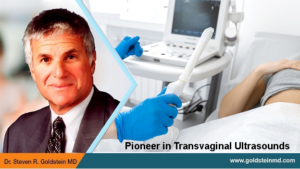
Dr Steven R. Goldstein MD is a former Director of Gynecologic Ultrasound at NYU Medical Center and an internationally recognized expert in gynecological ultrasound and imaging. The author of several books on gynecological ultrasound and imaging, Dr Goldstein is also the winner of the Joseph H. Holmes Clinical Pioneer Award from the American Institute of Ultrasound in Medicine, recognizing his career long contributions to research and patient care in gynecologic ultrasound.
Dr Goldstein personally performs all Saline Infusion Sonohysterograms (SIS) and is known as one of the most skilled operators in the world. There are no sonographers, no technicians, Dr Goldstein personally works on each case so he can see everything for himself and not rely on a third party report.
appointment request